Dog Grooming Clipper Blades Guide — Sizes, Types & Professional Maintenance
Choosing the correct dog grooming clipper blades is one of the most important decisions you make as a groomer.
Blade selection affects coat finish, clipping efficiency, blade longevity and — most importantly — the dog’s comfort and safety.
Whether you’re a professional groomer, grooming student or serious pet owner, understanding how clipper blades work will improve your results instantly.
This guide explains:
-
How dog grooming clipper blades work
-
The difference between blade sizes
-
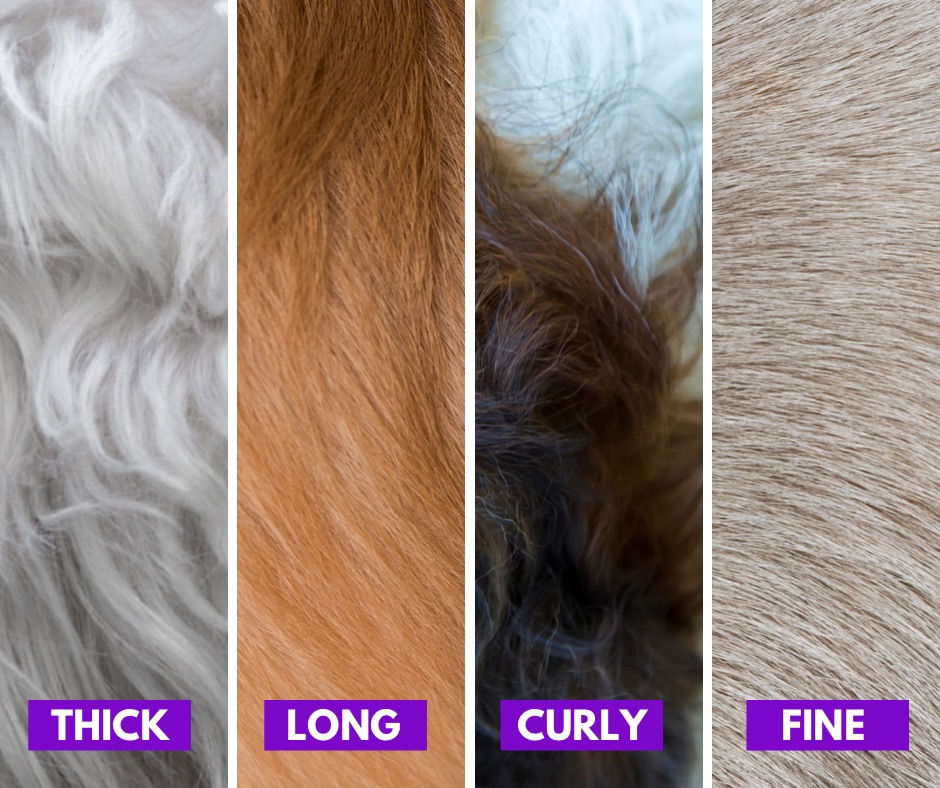
Which blade suits different coat types
-
How to maintain clipper blades properly
-
How to spot common blade problem
If you’re looking for professional clipper blades designed for performance and durability, explore our professional clipper blade range here with the Clipit Quattro Clipper.
Clipper Blade Anatomy: Key Components

The Clipper Blade is made up of several components.
- Sole Plate
- Top Cutter
- Blade Guide
- Spring
- Socket
- Screws
What Are Dog Grooming Clipper Blades?
Dog grooming clipper blades are precision-engineered cutting tools that attach to professional clippers (such as A5 systems). They determine how much coat is removed and how the finish looks.
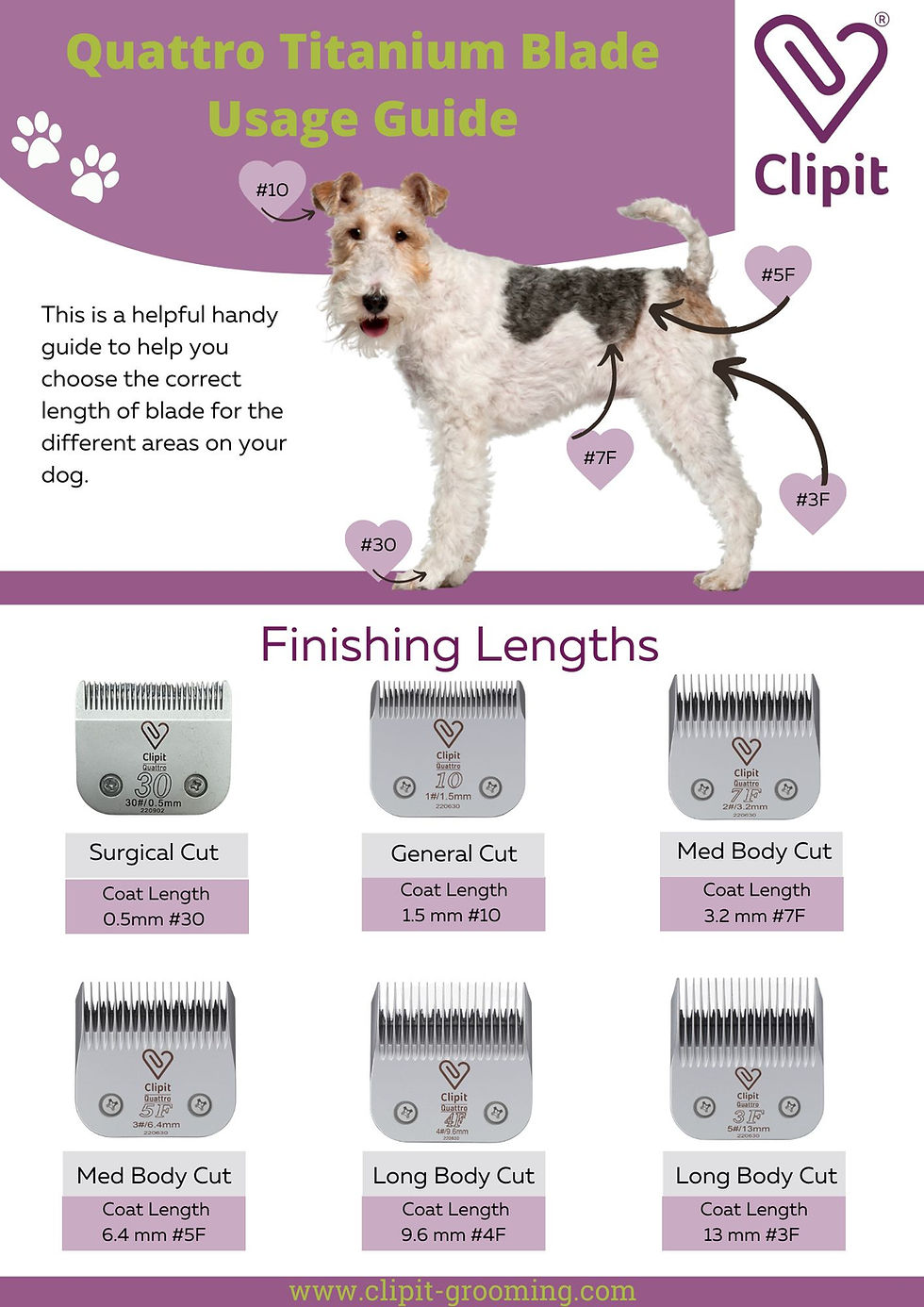
Each blade size is designed to leave a specific coat length. For example:
-
A #10 blade leaves approximately 1.5mm of coat
-
A #7F leaves around 3.2mm
-
A #4F leaves approximately 9.5mm
Understanding blade length is essential for safe and consistent grooming
Using the wrong blade can result in:
-
Uneven finish
-
Coat damage
-
Increased blade wear
-
Overheating
-
Risk of skin irritation
That’s why professional groomers rely on high-quality clipper blades that are correctly tensioned, properly maintained and suitable for the coat type they are working on.
For coat preparation tips, see our guide to professional dog shampoo and coat prep →
Clipper Blade Size Chart & Breed Guide
This chart will help you find the right sized pet grooming clipper blades to use for each breed.
BLADES
3 = 1/2" (Skip) 3F = 1/2" (Finish)
4 = 3/8" Skip) 4F = 3/8" (Finish)
5 = 1/4" (Skip) 5F = 1/4" (Finish)
7 = 1/8" (Skip) 7F = 1/8" (Finish)
9 = 5/64"
10 = 1/16"
15 = 3/64"
30 = 1/50"
GENERAL CLIPS
Sanitary & Sterile: 10 or
Feet & Pads: 15
Inside Ears & Tummy: 10
Teddy Bear (¾" long all over): 4
BREEDS
· Airedale Terrier
· Body & Tail - 7F, 5F, 4F, 3F
· Head & Neck - 7F
· Legs, Chest, Beard, & Eyebrows - 30 with ¾" or 1" Comb
· Ears, Cheeks, & Throat - 7F or 10
· American Cocker Spaniel
· Body, Sides, & Back Only - 7F, 5F, 4F
· Sides of Neck - 7F
· Face, Ears, & Throat - 10
· Bearded Collie
· Matted Coat - 7F
· Puppy Trim at 2" - 30 with 1¼" Comb
· Bedlington Terrier
· Body - 4 or 3
· Head, Ears, & Tail - 10 or 15
· Bichon Frise
· Matted Coat - 7F
· Show Trim at 1" - 30 & 1" Comb
· Pet Trim - 4 or 3
· Head - 30 with ¾", 1" or 1¼" Comb
· Bouvier Des Flandres
· Body - 3, 30 with ¾" or 1" Comb
· Legs - Scissors, 30 with 1" or 1¼" Comb
· Matted Coat - 7F
· Head - 4F
· Face - Scissors
· Ears - 10 or 15
· Briard Terrier
· Matted Coat - 7F
· Puppy Trim at 2" - 30 & 1¼" Comb
· Short Trim - 4F
· Face, Legs, & Undercarriage - Scissors
· Cairn Terrier
· Matted Coat - 7F
· Natural Look 2" - 30 & ¾" Comb
· Pet Trim, Shorter on Back - 4
· Head, Face, Legs, & Underbody - Scissors
· Ears - 10
· Chow Chow
· Matted Coat - 7F
· Natural Coat - Scissors
· Body - 7
· Puppy Trim - 30 with 1" Comb
· Short Trim - 3, 3F, 4, 4F
· Cocker Spaniel
· Body, Sides, & Back - 4F, 5F, 7F
· Neck - 9
· Face, Ears, & Throat - 10, 15
· Collie
· Body - 7F
· For More Length on Body - 4 or 3
· Short Trim - 3, 3F, 4, 4F
· Puppy Trim - 30 with 1" Comb
· Natural Coat - Scissors
· Dandie Dinmont
· Body, Sides, & Back Only - 5 or 4
· Head, Tail, Legs, & Under Belly - Scissors
· Legs & Undercarriage - Scissors
· Ears - 10 or 15
English Cocker Spaniel
· Body, Sides, & Back Only - 7F, 5F, 4F
· Front of Forearms - 7F
· Head, Neck, and Ears - 15
· English Setter
· Body, Sides, & Back Only - 7F, 5F, 4F
· Head, Neck, & Ears - 10
· Tail, Legs, Underbody - Scissors
· English Springer Spaniel
· Body, Sides, & Back Only - 7F, 5F, 4F
· Head, Neck, & Ears - 10
· Golden Retriever
· Matted Coat - 7F
· Body - 7F or 5F
· Legs, Tail, & Underbody - Scissors
· Great Pyrenees
· Matted Coat - 7F
· Puppy Trim - 30 with 1" Comb
· Long Body Trim - 4 or 3
· Irish Setter
· Body, Sides, & Back - 7F, 5F, 4F
· Head, Neck, & Ears - 7 or 10
· Tail, Legs, & Underbody - Scissors
· Irish Terrier
· Body, Sides, & Back - 7F, 5F, 5
· Head, Neck, & Ears - 10
· Tail, Legs, & Underbody - Scissors
· Keeshond
· Matted Coat - 7F
· Natural Coat - Scissors
· Short Trim, Back & Sides - 4
· Head, Neck, & Ears - 10 or 9
· Body, Sides, & Tail - 30 with 1" Comb
· Kerry Blue Terrier
· Body & Tail - 4F or 3F
· Face - 10
· Ears, Cheeks, & Throat - 10
· Legs - 30 with ¾" or 1" Comb
· Lakeland Terrier
· Body & Tail - 7F, 5F, 4F, 3F
· Head, Neck, & Ears - 10
· Legs, Chest, Beard, & Eyebrows - 30 with ¾" or 1" Comb
· Lhasa Apso
· Matted Coat - 7F
· Puppy Trim - 30 with 1" Comb
· Short Trim - 3F or 4F
· Head, Face, Tail, & Underbody - Scissors
· Maltese
· Matted Coat - 7F
· Puppy Trim - 30 with 1" Comb
· Short Trim - 4
· Head - 4F, 3F, 30 with ¾" or 1" Comb
· Face & Tail - Scissors
· Newfoundland
· Matted Coat - 7F
· Natural Coat - Scissors
· Short Coat - 4 or 3
· Old English Sheepdog
· Matted Coat - 7F
· Short Coat - 3, 3F, 4, 4F
· Puppy Trim - 30 with 1¼" Comb
· Head & Face - Scissors
· Pekingese
· Matted Coat - 7F
· Short Coat - 4 or 4F
· Poodles - Kennel Trim
· Matted Coat - 7F
· Face, Feet, & Base of Tail - 10 or 15
· Body & Legs - 5, 4, 3
· Top Knot & Tailpiece - Scissors
· Poodles - Lamb Trim
· Face, Feet, & Base of Tail - 10 or 15
· Body - 5, 4, 3
· Legs - 30 with ¾" or 1" Comb
· Top Knot & Tailpiece - Scissors
· Poodles - Summer Trim - Bikini Trim
· Face, Feet, & Base of Tail - 10 or 15
· Body & Legs - 7F or 5F
· Pom-poms, Top Knot & Tail Pom - Scissors
· Stomach - 10

Skip Toothed Blades
Skip toothed blades are noticeable because of their teeth. They have one long, one short tooth that expands the whole of the blade, and feeds the coarse hair into the blade. Mainly used before bathing to take off the rough coat.
Finishing / Full Cut Blades
The teeth on this blade are all the same length and are designed to create a smooth finish or full shave downs.
Wide/T-Blades
The width of this blade is 1" wider than a standard clipper blade. They are designed to be used on larger breeds, so they take coat off faster.
Surgical Blades
Surgical blades are mainly used by vets to shave for pre-operation, however you can use them on a hairless breed.
The Cut
Cutting with the grain will leave one clipper blade length longer. Clipping against the grain with clip one clipper length shorter.
Problems with Clipper Blades
Rattling Blades
Over a period of time where your blade lever drives the clipper blade at very high speed, the ears on the blade can spread and cause rattling. The ears are the two pieces of metal that protrudes upwards and are the locating points when attached to the clipper. Take a pair of pliers and gently pinch the ears together to stop rattling.
The tension is too tight
If the top cutter on the clipper blade won't move, then the tension could be too tight. How to check for correct blade tension is by moving the top cutter with your thumb. If the cutter does not budge or it is very difficult to move, then the tension is too tight. If however the top cutter moves very freely then the blade tension spring is under tension and can cause the same symptom as over tension.
The blade is not sharpened correctly.
Clipper blades do not have flat surfaces when you look at them, the teeth are slightly angled differently to the back rail to enable the teeth to cut along the front. If corrective sharpening is not undertaken by a professional engineer, you will experience dragging and snagging within the coat.For sharpening and servicing, visit here
Poor maintenance
Not finding time to look after your equipment can cost you more in servicing and sharpening long term. Cleaning and oiling your blades daily will save you pounds in replacements and help you run a more efficient business. If you want to understand how blade heat builds up during clipping, read our essential guide on maintaining your clipper blades correctly →
Related Products







Proper coat preparation directly affects how your clipper blades perform.
When a coat is thoroughly cleansed using a pH-balanced, professional dog shampoo, dirt, oil and product build-up are removed from the hair shaft. This creates a cleaner surface for the blade to glide across. A clean coat reduces blade drag, meaning the blade moves through the hair smoothly rather than catching or pulling.
Reduced resistance during clipping also lowers friction between the blade teeth and the coat. Less friction means the blade runs cooler for longer, helping to prevent overheating and improving comfort for the dog.
Clean coat preparation also improves the quality of the finish. When the hair is free from grease and debris, blades cut more evenly, resulting in fewer track marks and a smoother overall appearance.
Finally, correct bathing and drying before clipping supports blade longevity. Dirty or oily coats accelerate blade wear, dull cutting edges faster and increase strain on both the blade and the clipper motor. Starting with a properly prepared coat helps extend blade life and maintain consistent performance in a busy grooming environment.
For optimal coat preparation, explore our professional dog shampoo and bathing range designed specifically for salon performance.