


Blade Length Chart: Understanding Blade Lengths for Dog Grooming
Updated: Jul 23
Choosing the right blade length for dog grooming can be a daunting task, especially for new pet owners or grooming enthusiasts. Understanding how blade lengths work is fundamental to achieving the desired look and feel for your furry friend. In this blog post, we will dive into the specifics of blade lengths, including a helpful blade length chart to guide your grooming sessions.
Blade Length Chart
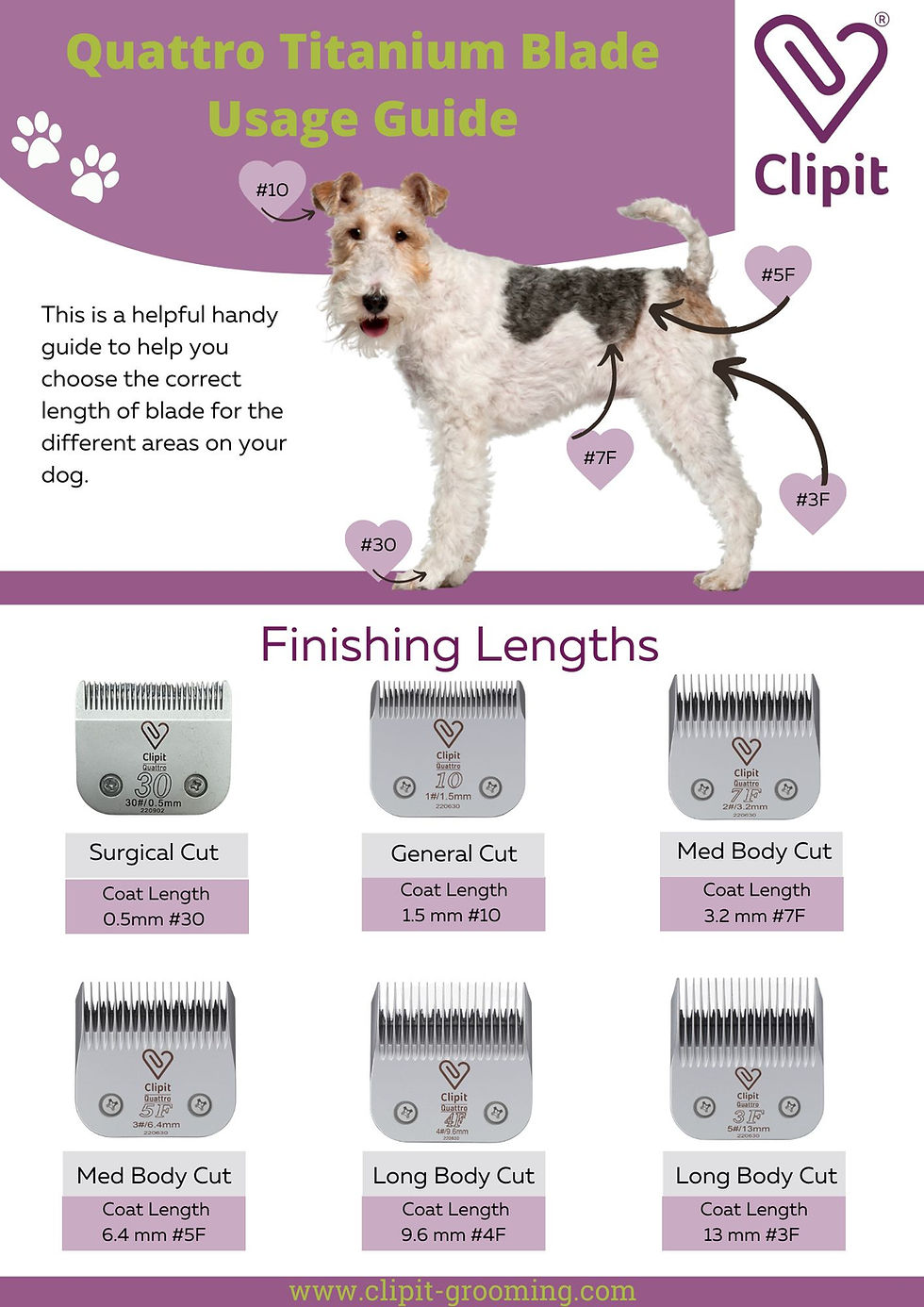
When it comes to dog grooming, the blade length can drastically affect the outcome of your clip. Different breeds and styles require different lengths to ensure a neat and clean look. Typically, clipper blades are numbered, with the numbers indicating the length of hair left after grooming. Here’s a general idea of how blade numbers correspond to the length of the cut:
No.10 Blade: Leaves about 1/16 inch of hair
No.7F Blade: Leaves about 1/8 inch of hair
No.5F Blade: Leaves about 1/4 inch of hair
No.4F Blade: Leaves about 3/8 inch of hair
No.3F Blade: Leaves about 1/2 inch of hair
As you can see, smaller blade numbers result in shorter cuts. Conversely, larger blade numbers leave a longer coat. Understanding these specifications helps you select the perfect blade for your dog's grooming needs.
Like what you read? Another great blog to read is The Ultimate Guide To Clipper Blade Sizes
How to Choose the Right Blade Length
Choosing the appropriate blade length depends on several factors, including your dog's breed, coat type, and the style you wish to achieve. Here are some considerations to keep in mind:
Breed-Specific Needs: Different breeds have different grooming requirements. For instance, a Poodle may require a much shorter blade length than a Golden Retriever. Always consider the breed standard when deciding on blade length. For more on dog hair care tips go to Can Knotted Dog Hair Be Brushed out?
Coat Type: Dogs with thick or curly coats often require shorter blade lengths to get through the dense hair. Flat-coated breeds generally do well with longer blades.
Desired Style: If you are seeking a specific style, such as a smooth, short coat or fluffy, longer cut, your blade choice will vary significantly. Research the look you want to achieve before deciding on blade length as well as reading 7 cleanest low shedding dog breeds.
Seasonal Considerations: During warmer months, pet owners may choose shorter cuts for comfort. In the winter, longer blade lengths are often preferred to keep dogs warm. There is much debate around how to Coat Care for Thick Dense-Coated Dog Breeds, but if you groom regularly with good dog tools and accessories, you will help your dog survive warmer days.
The Importance of Proper Grooming Tools
Using the right grooming tools is critical not only for achieving the intended look but also for the comfort and safety of your dog. Poor quality blades can lead to nicks and irritation on your dog's skin. Here are some recommended grooming tools:
High-Quality Clipper: Invest in a reliable clipper that suits your dog’s grooming needs. Effortless grooming from first clip to pro finish — the Clipit Quattro Cordless Clipper handles all coat types with power, precision, and comfort for every level of groomer.
Sharp Blades: Ensure your blades are sharp and well-maintained. Dull blades can tug at the skin, causing discomfort for your pet.
Blade Length Chart Reference: Keep a reference of the dog grooming blade length chart handy for quick decisions during grooming sessions.

Maintenance of Clipper Blades
Maintaining your clipper blades is essential for effective and safe grooming. Here are a few tips for keeping your blades in top shape:
Regular Cleaning: Brush off hair and debris after each use. This prevents hair from tangling or gumming up the blades.
Lubrication: Use clipper oil on your blades regularly. This keeps them running smoothly and prevents overheating.
Sharpening or Professional Service: Depending on usage, consider getting your blades professionally sharpened after every few grooming sessions. This ensures clean cuts every time.
Storage: Store blades in a cool, dry place. Utilizing a blade holder or case can help prevent damage.
Troubleshooting Common Clipper Issues
Even with proper maintenance, issues with clippers can arise. Here are some common problems and how to address them:
Clippers Overheating: If your clippers heat up quickly, take breaks. Allowing them to cool down prevents discomfort for your dog.
Pulling or Tugging: If your clipper pulls at your dog's hair, it may indicate dull blades. Ensure they are properly sharpened or replace them if necessary.
Clippers Stopping: If your clippers stop running, check the batteries or power supply. Cordless clippers often need regular recharging.

Best Practices for a Successful Grooming Session
Grooming can be a positive experience for both you and your dog if approached correctly. Here are some best practices for a successful grooming session:
Prepare the Environment: Create a calm and quiet area for grooming. Reduced noise and distractions can help your pet feel comfortable.
Use Treats and Rewards: Reward your dog with treats during and after grooming to create a positive association with the process.
Introduce the Clipper Slowly: Let your dog get accustomed to the sound of the clipper before beginning. This helps reduce anxiety.
Take Your Time: Rushed grooming can lead to mistakes or accidents. Take your time, especially in sensitive areas like the paws and face.
Seek Help if Needed: If you're uncertain about how to groom your dog, consider consulting a professional groomer. They can offer valuable tips and tricks.
By following these practical recommendations and understanding the various blade lengths and their applications, you'll be well-equipped to groom your dog effectively.
Final Thoughts on Blade Lengths for Dog Grooming
Mastering the art of dog grooming requires both knowledge and practice. With an understanding of blade lengths, proper grooming tools, and essential maintenance tips, you can ensure a safe and enjoyable grooming experience for your furry friend. Remember, happy grooming also correlates with the confidence your dog feels about the entire process.
Happy grooming!


