


Staying Safe in a Grooming Salon
Updated: Aug 6, 2025
No matter how careful you are, accidents can happen in a grooming salon, and with an environment that is full of equipment and animals, the risks are higher. In this article Staying Safe in a Grooming Salon we advise you how to be prepared in the event of an emergency.

Dog grooming is a risk career, as we all know. Being around dogs and cats presents its own potential hazards. But like any professional setting, especially one involving animals, safety should always come first.
Staying Safe in a Grooming Salon-Asthma
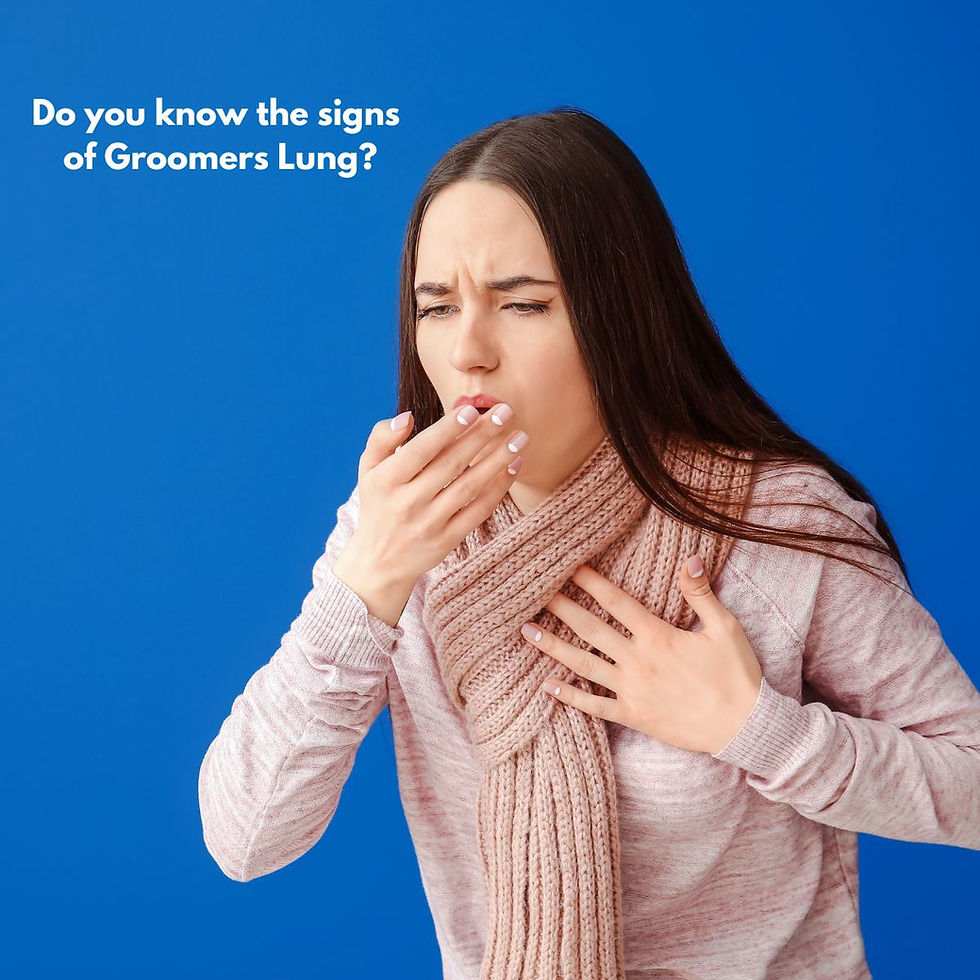
There are plenty of asthma triggers in a salon - from dead skin cells, hair, pollen and a damp environment. A groomer suffering with an asthma attack may have difficulty in breathing or speaking. They will be wheezing, coughing and noticeably in distress, and it's important to action quickly to help stop them becoming unwell.
If you're a groomer showing signs of the above, you could be suffering from Groomers Lung.
Groomers Lung takes place over a period of time and many groomers do not notice the gradual change. If you find you have a persistent cough that lasts for eight weeks, go and see your doctor. There is no known "cure", so that is why you should put into place preventative measures to ensure it never happens to you, and by taking a few key precautions can help you breathe easier and stay safe while doing the job you love.
1. Wear a Protective Mask
A good-quality mask or respirator can make a big difference in reducing exposure to airborne particles. Look for masks rated FFP2 or FFP3 that filter out fine hair, dander, and grooming product aerosols.
2. Improve Salon Ventilation
Proper airflow is essential. Use extractor fans, keep windows open when possible, and invest in an air purifier with a HEPA filter to trap allergens and maintain cleaner air throughout the salon.
3. Avoid Aerosol Products
Spray detanglers, dry shampoos, and disinfectants can linger in the air and irritate your lungs. Opt for pump bottles or cream-based alternatives when possible, and always spray in well-ventilated areas or away from your face.
4. Vacuum Frequently
Hair and dander settle quickly—especially under grooming tables and around dryers. Use a vacuum with a HEPA filter throughout the day to keep the workspace clean and reduce airborne irritants.
5. Know Your Limits
If your asthma is triggered easily or you’re having a flare-up, don’t push through. Take breaks, use your inhaler if needed, and communicate with your team so you’re not overwhelmed or working in an unsafe environment.
What to do if you show signs of Groomers Lung?
Groomers Lung has only recently been talked about within the industry. There is still lots to do with grooming colleges in education, grooming seminars need to have it as a topic. Help spread the word, so more groomers get to know the symptoms.
But if you are a groomer and you are experiencing any of the symptoms discussed, please read All About Groomers Lung, and How To Stay Safe and then get yourself checked out by your Doctor.
Groomers and Cuts: How to Stay Safe Around Sharp Tools
You probably handle sharp blades and scissors on a regular basis in the salon without giving them a second thought. Cuts and nicks are unfortunately common among groomers, but with the right precautions, they can often be avoided.
However grooming salons are not particularly hygienic environments, so acting fast to help the casualty is important.

1. Always Stay Focused
Distraction is one of the leading causes of injury in the salon. Whether you’re using curved scissors around a dog’s face or trimming nails on a wriggly pup, even a slight lapse in concentration can result in a nasty cut. Stay present, work slowly when needed, and if the dog is too fidgety, pause and regroup.
2. Keep Tools Well Maintained
Blunt dog grooming scissors or clipper blades are more dangerous than sharp ones. They force you to use more pressure, which increases the chance of slipping and cutting yourself (or the dog). Make sure your tools are sharpened, well-oiled, and regularly inspected for damage. Clipit Easy Oil, is great for maintaining both clipper blades and scissors.
Dog grooming scissors should always be sharp to ensure clean cuts, reducing the risk of pulling the hair. For useful Tips for Using Scissors Safely on Your Pet In this post, we will explore essential tips for using scissors on your pet safely and effectively.

3. Use Protective Gloves When Needed
If you're dematting a difficult coat or handling sharp blades, consider wearing lightweight cut-resistant gloves. These can help protect your hands from both accidental self-cuts and sharp mats close to the skin.
4. Handle Blades with Care
Clipper blades are easy to drop—and when they hit the floor, they can break or become dangerously sharp. Always turn your clipper off before changing blades, and handle them by the sides, not the cutting edge.
5. Clean and Cover Wounds Immediately
Even small cuts can become infected in a grooming environment full of hair, dander, and product residue. If you do get a nick or cut:
Clean it thoroughly with antiseptic
Cover it with a waterproof plaster or bandage
Avoid touching animals directly with an open wound
Keeping a fully stocked first aid kit nearby is a must in every grooming salon.
Groomers and Dehydration: Don’t Forget to Drink!
We make sure dogs have a bowl of water nearby at all times, but how many times have you come home absolutely parched from a day in the salon because you forgot to drink yourself?
Dehydration doesn’t just make you thirsty—it can seriously impact your focus, energy levels, and overall health. Grooming is a Physical Practice—Respect Your Body
Why Groomers Are at Risk:
Hot salons from dryers, steam, and poor ventilation
Constant movement, lifting dogs, and bending
Back-to-back appointments with no scheduled breaks
Skipping meals or drinks to stay on time
Signs of Dehydration:
Headaches or dizziness
Dry mouth or lips
Fatigue or sluggishness
Brain fog or poor concentration
Dark yellow urine
How to Stay Hydrated During the Day:
Start your day with water—not just coffee
Keep a reusable water bottle nearby and in sight
Set hydration reminders on your phone or smartwatch
Snack on water-rich foods like fruit and cucumber
Take quick breaks, even 2 minutes to hydrate and breathe
Even mild dehydration can affect your coordination and concentration—two things every groomer needs in top form to handle sharp tools and unpredictable dogs safely.
Every groomer needs The Zen of Dog Grooming in their life to prevent burn-out.

"Dog grooming isn’t just a job—it’s an art, a lifestyle, and for many, a calling. But with the long hours, physical demands, and emotional toll of caring for pets and people alike, it’s easy to lose your spark, so staying safe in a grooming salon is key"
Groomers and Animal Bites: Understanding the Risk & Staying Protected
Working closely with dogs every day means groomers are at higher risk of being bitten—especially when handling nervous, aggressive, or unfamiliar pets. Even the most well-behaved dog can react unpredictably when frightened, in pain, or overstimulated.
While bites may be rare in a calm salon environment, it’s essential to stay alert and know how to protect yourself.
No two dogs are the same when it comes to understanding canine communication. They may share a breed or haircut style, but each has a unique emotional makeup. Some dogs come from homes with clear boundaries and training—they settle quickly in the grooming environment. Others arrive unsure, stressed, or reactive.
Why Bites Happen:
Fear or anxiety in a new environment
Handling sensitive areas like paws, ears, or tail
Pain from matting, skin conditions, or injury
Overstimulation from dryers or loud clippers
Lack of prior grooming experience
Reduce the Risk:
Read the dog’s body language: watch for lip licking, growling, yawning, stiff posture, or avoidance
Use a muzzle if necessary (and safe to do so)—always with owner consent
Work in pairs when handling known biters
Take breaks if the dog is overstimulated or stressed
Never push through a groom if the dog is clearly distressed
If a Bite Occurs:
Clean the wound immediately with antiseptic
Apply pressure to stop bleeding and cover with a sterile dressing
Seek medical attention—especially for deeper bites or if the skin is broken
Record the incident and report it to the salon manager or owner
Follow up with the dog's owner in a calm, professional manner

Important Note: Always have a salon policy in place for handling aggressive dogs, and ensure that all staff are trained to follow it. Your safety comes first.
Why Understanding Canine Communication
The British Isles Grooming Association (BIGA) is working closely with respected Animal Behaviourist Andrew Hale who is also a behaviour consultant for Pet Remedy to support groomers in building their knowledge of canine communication. Together, we’re championing the need for greater education around emotional safety and consent-based handling in grooming.
In the article Understanding Canine Communication Andrew Hale talks about the 3 C's that are involved in grooming dogs and how to recognise the signs of dogs in stress and discomfort.
Eye Injuries in the Grooming Salon: Prevention and First Aid
Whether from bits of hair flying about or more serious blows to the face, eye injuries can happen without warning and vary from minor to serious.
Common Causes of Eye Injuries:
Hair or nail fragments flicking into the eye
Shampoo, conditioner, or sprays splashing upward
Clipping close to sensitive areas like the face
Sudden movements from a dog during scissoring
Accidental bumping from wriggly pets

Prevention Tips:
Wear protective eyewear such as lightweight safety glasses or goggles, especially during face trims or high-velocity drying
Use a visor or shield when bathing dogs to guard against splashes
Position yourself carefully—always be aware of where your tools and the dog’s head are
Keep scissors and blades sharp to avoid tugging or jerky movements
What to Do If an Eye Injury Occurs:
Stop immediately and assess the injury—don’t rub your eye
If it’s a chemical splash, rinse your eye gently with clean, lukewarm water for at least 10 minutes
If debris or hair is in the eye, flush it out gently with sterile eyewash or water—never try to remove it with fingers or tools
If you experience pain, blurred vision, swelling, or redness, seek medical attention straight away
Document the incident and ensure it’s reported to management
Pro Tip: Keep a small Eye First Aid Kit in your grooming salon, including saline solution, eye wash pods, and clean gauze. It’s a small addition that could prevent a big problem.
Conclusion
While we can’t always predict when an accident might happen, being prepared can make all the difference. From understanding first aid to ensuring your salon is equipped with the right tools and procedures, every step you take today builds a safer environment for tomorrow. Prioritising safety not only protects you and the pets in your care but also strengthens your reputation as a responsible, professional groomer. Stay alert, stay equipped, and stay safe.
You maybe interested in:


